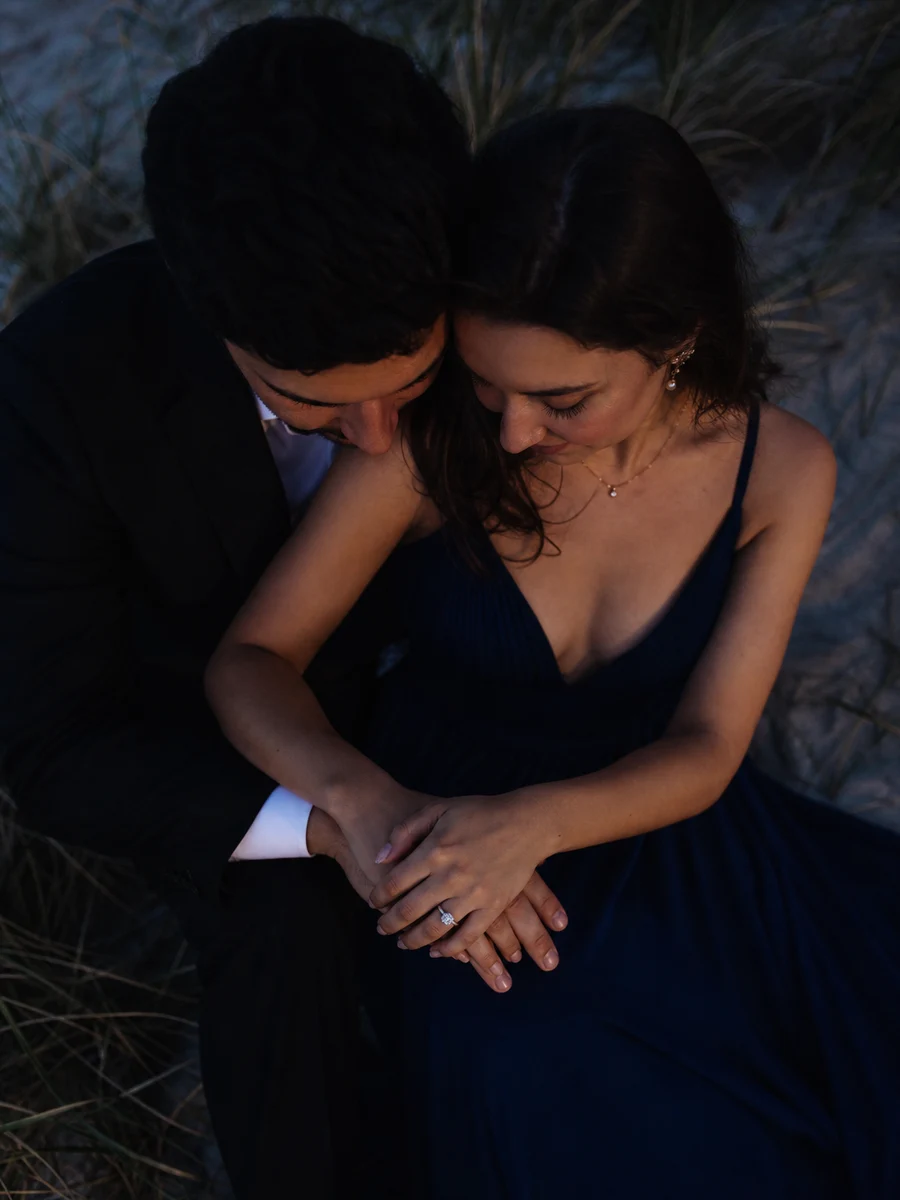
Editorial Ring Reveal at Blue Hour Engagement Photos
The blue hour adds a crisp, sophisticated edgeâlet your ring catch the ambient light and keep your hands relaxed for an effortless editorial look.
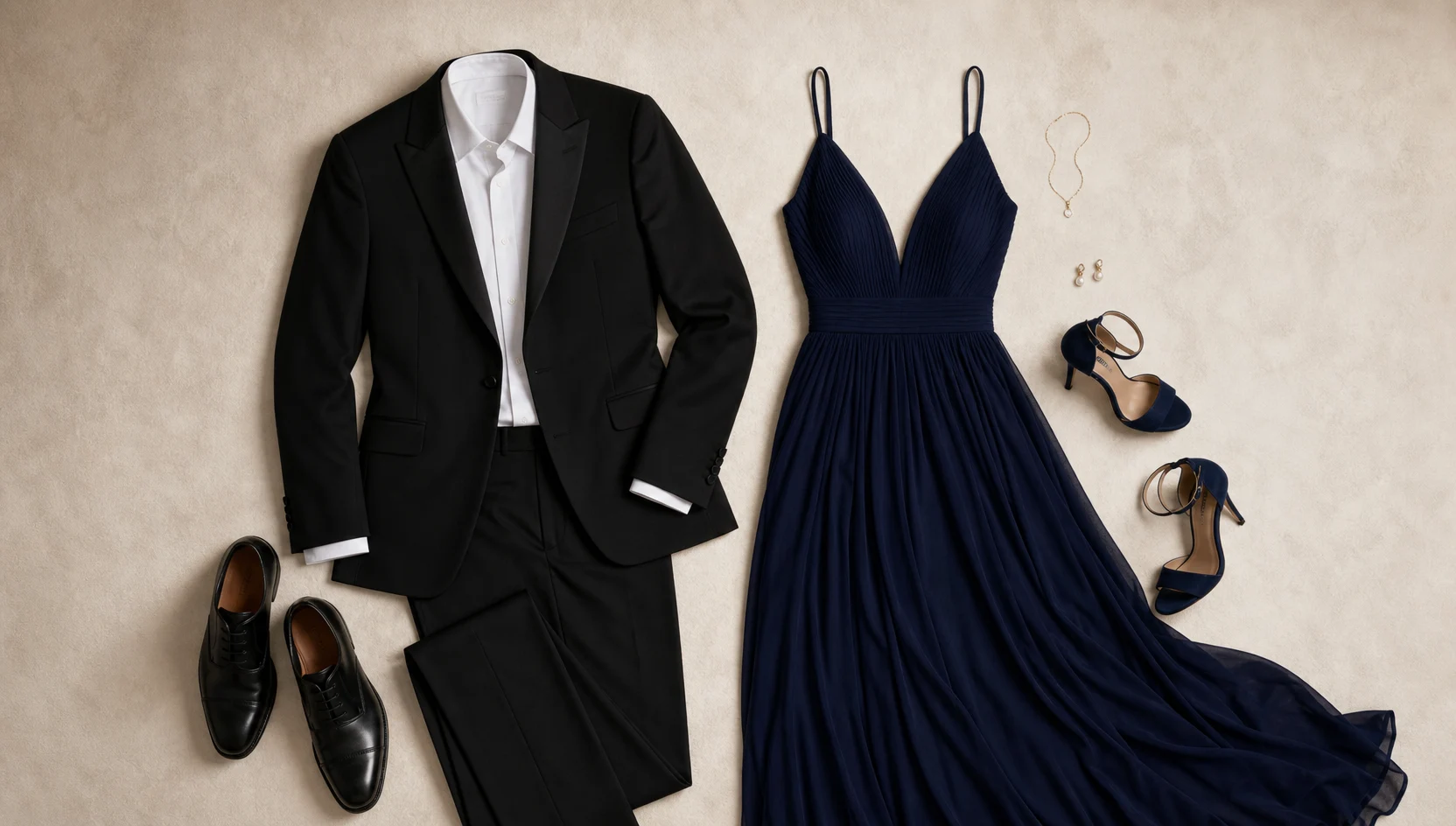
Outfit Ideas

He
suit
black
She

The blue hour adds a crisp, sophisticated edgeâlet your ring catch the ambient light and keep your hands relaxed for an effortless editorial look.

He
suit
black
She
v-neck gown
navy blue
At 6:42 p.m., the light switches. One minute the sun is a white coin over the headland, and the next it drops into a bank of sea haze and turns honey-gold, then molten peach. You feel it before you see itâthe heat on your shoulders softens, and every wet stone and shell on the shore starts throwing a shadow ten feet long. Thatâs your cue.
The photographer has you walk to the tideline where the sand is hard and reflective. Your heels sink anyway, so you step out of them and hand them off. The water is chill but not numbâmaybe 55 degreesâand each retreating wave pulls a thin sheet of light across the flat. Heâs taken off his jacket already. Under the dark suit he has a plain white button-down, which you now notice is a good thing: without it, youâd both disappear into the dusk.
You settle onto a low driftwood log the photographer scouted earlier. She kicks a pebble away so you can rest your feet. He sits first, then you beside him, turning inward. The pose is the reason youâre here: your ring hand over his on his knee, the diamond just catching that last low raking light. Your foreheads lean together. You can smell the wool of his suit jacket mixed with salt, and for a second the whole world is the sound of small waves and your own breathing.
The photographer drops a tiny LED panel onto the sand, aimed up at your faces so your eyes donât go flat as the sky dims. She works fast, because the blue hour is shortâmaybe fifteen minutes tonightâand every minute the color deepens. Out past the surf, the sky moves from peach to violet to a cold navy. That contrast is the whole point of these engagement photos: the warm skin tones against the cool, moody backdrop.
You shift the ring a quarter inch so it gleams. Your hands are a little sandy but thatâs honest. The LED catches the facets and throws a tiny sparkle onto his cuff. The photographer tells you to hold still, then no, relaxâthe best frames come when your shoulders drop. By 7:12, the light is gone and the log is starting to feel damp. You grab your dress in one hand and your shoes in the other, and the photographer passes you a towel from her bag. Sand gets everywhere, but you expected that. What you didnât expect was how the whole thing felt less like a shoot and more like ten minutes of quiet right before night came on.
đ Golden Hour â Shoot in the hour after sunrise or before sunset for warm, flattering light and long soft shadows.
High tide can erase the flat, reflective sand you want, but it doesnât ruin the shoot. First, check a tide chart for your date and time. If the beach is narrow, move to the upper dry sand near dunes or rocks where the water doesnât reach. Those areas can give texture and wind-shaped patterns. The blue-hour sky still delivers the color, and a longer lens can compress the background to hide mud. If you absolutely need wet sand, reschedule for a day when low tide aligns with sunsetâmany beaches have a six-hour swing, so thereâs usually a window within a couple days.
Yes. It will get into your shoes, your pockets, your cuffs, and between your ring and skin. Expect it. Bring a microfiber towel to wipe hands and jewelry between setups. For a gown with a train, the hem will collect sand instantly; shake it out between locations and accept the texture in photosâit adds a real, tactile quality. If you wear a suit, choose smooth fabrics like wool or a tight-weave cotton that release sand easier than tweed. Pack baby powder in your bag: dust it on sandy skin and the grains slide right off. Most importantly, donât fight it. Some of the best moments happen when youâre laughing through the grit.
Start with the backdrop you want during blue hour. A wide, flat beach with wet sand gives mirror reflections and an expansive feel; a cove with rocky outcroppings adds structure and shadow. Check the beachâs southern or western exposureâat sunset, a west-facing shore will have the sun setting over the water, while a south-facing one may tuck it behind a cliff earlier but yield softer, longer color. Access matters: after shooting in near-dark, you want a short, safe walk to the car. Scout the beach or use Google Earth to note public restrooms, parking, and any beach closures after sunset. Finally, go on a weekday if possible to avoid crowds in the background.
During blue hour, contrast is everything. Darker tones like navy, charcoal, or deep burgundy anchor you against the fading light, but they need texture or lighter accents so you donât become a silhouette. A white or cream shirt under a dark jacket gives the eye a focal point. Avoid solid black from head to toe; it reads flat. Soft pastelsâlike dusty rose, sage, or pale grayâglow subtly in the remaining light without overpowering the scene. Reflective fabrics or sequins can throw off the cameraâs exposure, so stick with matte or lightly textured materials. The goal is for your outfit to complement the moody sky, not compete.
Absolutely, and youâll often get a clearer, more dramatic sky because humidity is lower. The blue hour still happens at sunset, which comes earlyâaround 4:30â5:30 p.m. in many placesâso plan accordingly. Dress in layers: a long-sleeved velvet dress or a wool coat over your outfit between shots keeps you warm. Wind chill on an exposed beach can be fierce, so consider hand warmers in your pockets. The low winter sun casts long, crisp shadows all afternoon, giving you a wider shooting window. Check for winter beach closures or permit requirements, and watch for icy patches on rocks. The cold can add a rosy flush to your cheeks that reads beautifully on camera.
Start with a humidity-resistant primer and setting spray. For makeup, go slightly heavier on blush and lip color than usual, as the cool twilight light can wash you out. Avoid glossy finishesâtheyâll pick up glare from the LED or reflector. For hair, embrace texture: a soft braid, low twist, or curls pinned back withstand moisture better than straightened styles. Bring a travel-size anti-humidity spray and a clean mascara wand to tame flyaways. If itâs truly humid, your photographerâs LED light will cast a catchlight in your eyes, so keep your gaze bright. Once you leave the beach, a quick blot with blotting papers removes any dewy shine.
For most of the shoot, go barefoot. It looks natural, you feel the sand, and you wonât wobble on heels. Bring a pair of clean, simple sandals or flats to walk to and from the location, and stash them in a bag once youâre on the sand. If you plan to wear heels for a few standing poses, choose a block heel or wedgeâanything with a wider base wonât sink as deeply. Water-resistant dress shoes work for him, but a full-grain leather sole might get ruined by saltwater, so bring a backup pair. Pack a towel to dry your feet before putting shoes back on, because wet sand inside dress socks feels awful on the drive home.