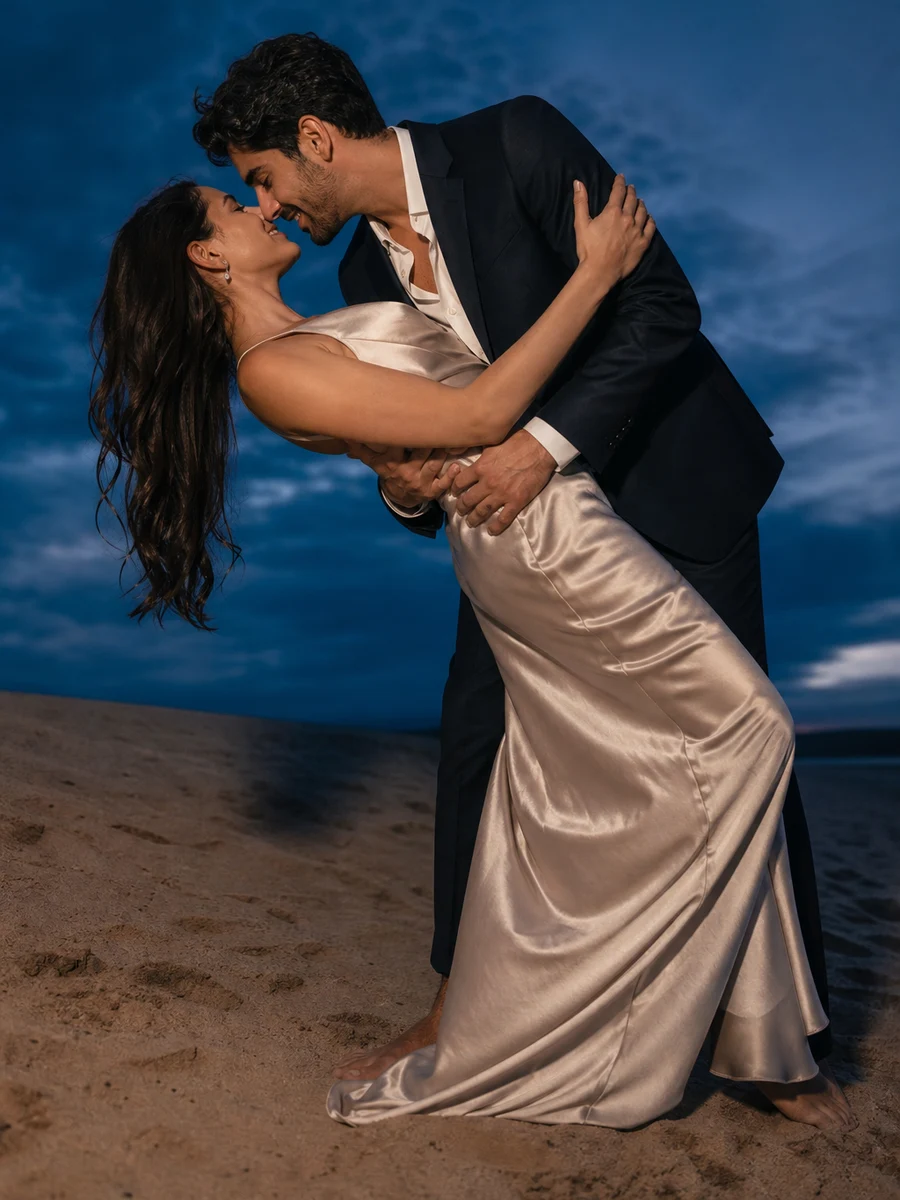
Twilight Dip Kiss on Empty Dunes Engagement Photos
The dip kiss works best when itâs slow and controlledâhold the pose a beat longer than you think for that cinematic, editorial moment.
Outfit Ideas

He
suit
dark blue
She
satin gown

The dip kiss works best when itâs slow and controlledâhold the pose a beat longer than you think for that cinematic, editorial moment.

He
suit
dark blue
She
satin gown
champagne
The last warmth drains from the sand as you climb the dune, the ocean a hushed roar beyond. Your satin gown in champagne slides cool against your legs, catching the final tangerine slice of sun. He steadies his feet wide, one hand firm on the small of your back. You lean into the dip, head falling back, tasting salt airâand for a heartbeat, the world is just the two of you and the darkening sky.
Your photographerâs voice cuts through the wind: âHold thereâflash is lighting your faces.â A crisp burst fires, carving your silhouettes against the indigo horizon. Youâll feel the flashâs warmth, a welcome contrast to the cool sand under your bare feet. The off-camera light ensures your expressions stay bright even as the sky fades to ink.
Arrive forty minutes before sunset to scout a dune hollow where the wind whispers softer and distant footprints vanish. Bring a blanket to wrap between takesâtwilight chills quickly. Keep a tide-check app handy; the best beach engagement photos happen on receding tides that leave smooth, reflective sand. Your heels are useless here, so go barefoot, but have flip-flops stashed for the walk back.
As blue hour deepens, the flash becomes your secret weapon, freezing the dip kiss with crisp detail while the sky glows deep violet. You might shiver, but that just pulls you tighter into his arms. The silence of empty dunes makes every whispered âI love youâ feel monumental. When you finally pull away, your lips will be cold, but your engagement photos will hold the heat of that moment forever. One tip: book your session around the new moon for a darker sky that makes the flash pop even more dramatically.
đ Golden Hour â Shoot in the hour after sunrise or before sunset for warm, flattering light and long soft shadows.
Not at allâfog can add a dreamy, intimate mood to your beach engagement photos. Soft, diffused light wraps around you without harsh shadows, and the mist simplifies the background, keeping focus on your connection. Youâll want to dress a bit warmer and perhaps add a textured wrap that catches the damp air. Your photographer will likely use flash to make your faces pop against the muted tones. The empty beach feel amplifies, since fewer people venture out. Embrace the mystery; some of the most romantic shots come from weather that feels like a secret between you two.
Aim to book 2-3 months ahead, especially if you want a weekend golden hour slot during peak summer or fall. Popular photographers fill their calendars early for the best light. This lead time also lets you align tides and moon phasesâfor a twilight dip kiss, you might target a new moon for a blacker sky. If youâre flexible with weekdays, you might find openings 4-6 weeks out. Once booked, coordinate a backup date for weather. Pro tip: sunset times shift, so confirm the exact shoot time two weeks before.
Typically 60 to 90 minutes. This window captures the transition from golden hour into blue hourâcrucial for the twilit look you want. The first 20 minutes are often for warming up and walking shots; the last 30 are for the dip kiss and flash-lit portraits. Factor in time to hike to a secluded dune spot. If youâre comfortable and the light is cooperating, your photographer might extend a bit, but most sessions wrap within 90 minutes to avoid fatigue and cold. A brief session can feel rushed, so avoid anything under an hour if you want variety.
It depends on the beach. Public beaches often allow casual photography without a permit, but some state parks or protected dunes require one for professional shoots. You should call the local park office or check their website. The fee is usually modest, from $25 to $100. Even if not legally required, a permit can give peace of mind and sometimes grants access to restricted areas. Ask your photographerâthey often know local regulations. If the beach is privately owned, get written permission. Avoid fines by double-checking a week before your shoot date.
Yes, barefoot feels natural on the sand and suits the elegant, unstudied look of a dip kiss. Your feet sink slightly, giving the pose a grounded, intimate feel. However, sand can be cold during twilight, so pack a small towel to wipe off sand and slip into flip-flops between setups. If youâre walking long distances over pebbly areas, wear sandals and remove them once on the dune. For the dip, bare feet help him balance better. Avoid heels entirelyâtheyâll sink and strain your ankles. The bonus: youâll feel more connected to the setting.
Wind can be your ally if you lean into it. It adds movement to her gown and hair, creating a cinematic feel in your engagement photos. But strong gusts can make the dip pose trickier and chill you fast. Choose a sheltered dune pocket if possible. Pinning hair loosely helps it flow without whipping your face. Heavier satin fabric wonât fly up as much as light chiffon. Use your body angles: face the wind together for dramatic billowing. Embrace flyaway hairsâthey convey energy. If sand is blowing, shield your eyes between takes and trust your photographerâs flash to freeze the action.
Yes, but keep them minimal and meaningful. A vintage lantern lit during blue hour casts a romantic glow and adds warmth. A lightweight blanket in a natural tone doubles as warmth and a sitting surface. Avoid large signs or clutter that distract from the landscape and your connection. If you bring Champagne and flutes, opt for plastic and keep the moment containedâfoam and sand donât mix. Think of props as accents, not focal points. The empty dunes and twilight sky are your grand backdrop; a subtle prop like a floral crown or a simple scarf can tie everything together without stealing the show.